

PT Bumi Cahaya Unggul x Monitor ERP: From implementation to seamless production operations in just 3.5 months
Founded in 1979, PT Bumi Cahaya Unggul (BCU) is a world-class engineering company specializing in the design and fabrication of complex rotating equipment and fluid-handling machinery. In early 2026, BCU completed its implementation of Monitor ERP to enable real-time production reporting and streamline manufacturing processes.
Based on our positive experience, I would rate Monitor ERP a 10 out of 10. For engineering and manufacturing companies like BCU, Monitor ERP is currently the best-fit solution available.
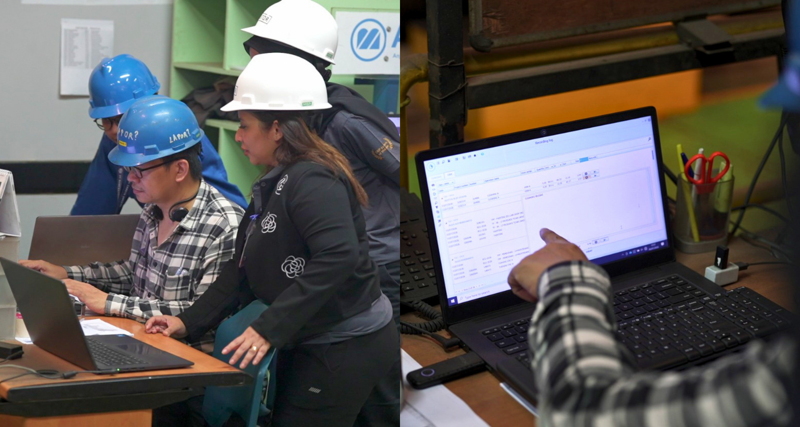
Previously, real-time production reporting was simply not possible. Even after work in the workshop was completed, manufacturing orders still had to wait several days before they could be closed.
Key challenges before Monitor ERP
Monitor ERP is the third ERP system implemented by BCU, following two previous systems that were unable to support real-time production reporting.
Manufacturing order closing delays (up to 5 days): Processing orders through a single administrator created severe bottlenecks during peak production periods.
Limited real-time production visibility: Production data was only recorded in the system after the entire fabrication process was completed, rather than being captured while work was actively in progress.
With Monitor ERP, BCU overcame these operational challenges by eliminating lengthy order closing delays—reducing the process from 5 days to just 10 minutes while enabling real-time visibility across production operations.
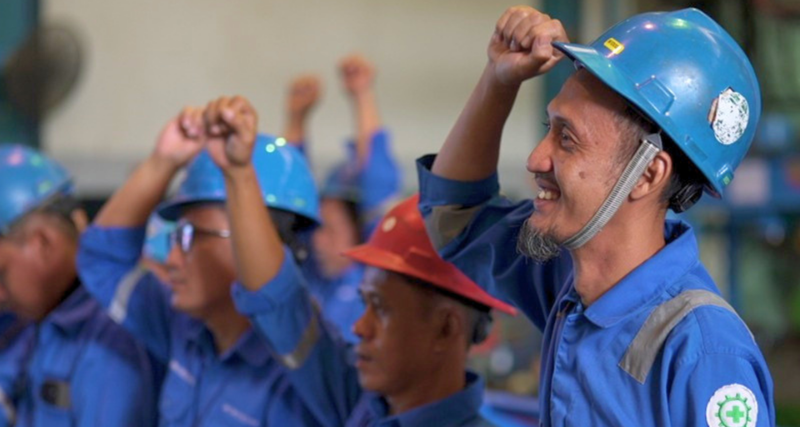
With all data centralized in one integrated system, teams can access the same information in real time. This has improved communication between departments, reduced misunderstandings, and enabled faster coordination and more timely record-keeping.
Implementation of Monitor ERP
Monitor ERP has streamlined BCU’s shop floor operations by simplifying data capture, reducing reporting time, and improving production traceability.
Faster shop floor reporting: Reporting time has been reduced from 10 minutes to just 2–3 minutes per report, enabling faster updates from the production floor.
Simplified reporting process: Manual data entry has been reduced from completing 5-6 fields in electronic forms to simply clicking “Start” and “Stop” within Monitor ERP.
Enhanced quality traceability: Monitor ERP’s Time recording module captures every stage of the production process, providing accurate work tracking and traceability, including integration with Mazak CNC machines and premium laser welding equipment.
Real-time production visibility: Shifted from delayed end-of-day reports to continuous, live production tracking.
"When I first heard that we were implementing Monitor ERP, I was worried it would be complicated. Once we started using it, the process turned out to be much simpler than expected," shares Agus Purwanto, Shop Floor Operator at PT Bumi Cahaya Unggul.
Monitor ERP has empowered BCU to move from fragmented production tracking to a more connected, efficient, and data-driven manufacturing operation.
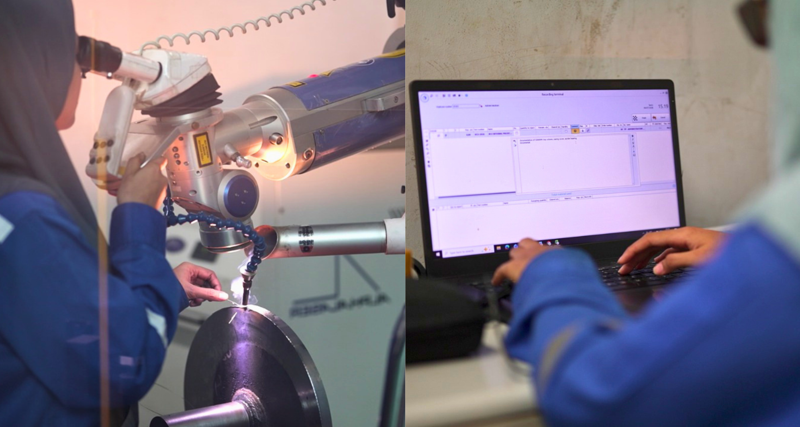
When it comes to ERP implementation, 3.5 months is a remarkably short timeline. At the beginning, there were many doubts from the BCU management team, but I was confident that the Monitor ERP implementation could be successfully delivered.
A principal-led ERP implementation completed in just 3.5 months
PT BCU selected Monitor ERP because of the direct support provided by the local principal team, rather than relying on a generic ERP solution with a one-size-fits-all approach.
"With the support of Monitor ERP and its implementation team, we successfully established real-time reporting across our workshop, and the system is now running smoothly," highlights Levina Ranisari, Processing Division Manager at PT Bumi Cahaya Unggul.
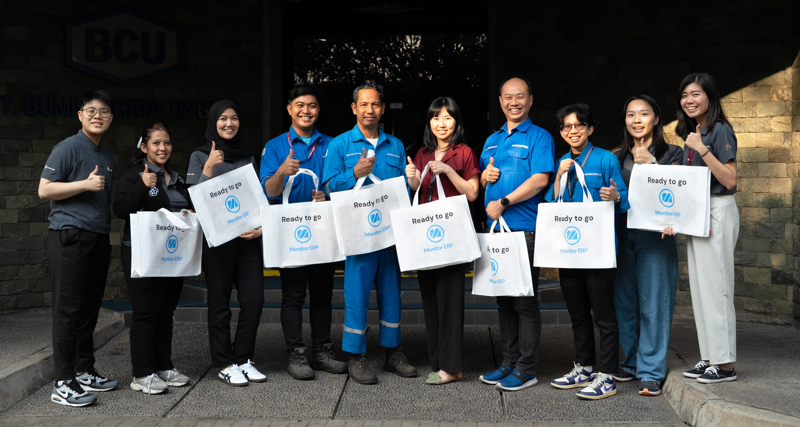
With a strong digital foundation powered by Monitor ERP, PT Bumi Cahaya Unggul continues to strengthen its position as a leading manufacturer of rotating equipment and fluid-handling machinery—supported by disciplined operations, accurate data, and seamless cross-functional collaboration.
-

Customer cases
The Billion-dollar company engcon switched to Monitor ERP in just four months
engcon Group is a global company with over four hundred employees in sixteen countries. When it was time to change their ERP system, it was clear that the project required determination, clear priorities, and a strong focus on standardization. They chose Monitor ERP, and in only four months, engcon
-

Customer cases
Qvantum saves time and improves invoice flow using EIM Workflow
Qvantum is a producer of heat pumps at the forefront of energy transformation that understands the broader societal perspective and the integration of heating systems into larger energy grids. By combining robust Swedish engineering with innovative software, Qvantum has developed an energy efficient
-

Customer cases
Focus on efficiency and trust: Lind Jensen Maskinfabrik and three years with Monitor ERP
For more than 60 years, Lind Jensen Maskinfabrik has delivered quality solutions to a wide range of industries. The Hydraulics division supplies OEMs around the globe with mobile hydraulics, lift/crane equipment, and hydraulics for the wind industry. The Agri division provides several overseas marke
-

Customer cases
LEAX Skaraborg boosts efficiency with Advanced stock management
When LEAX Skaraborg chose to implement Advanced stock management, their daily workflow improved significantly. From manual and time-consuming to efficient and well-structured. “I’d recommend Advanced stock management to other companies. I don’t understand how we managed without it! Advanced stock ma
-

Customer cases
From manual to automated – Eco Log optimizes their processes with PDM integration
For Eco Log, a leading manufacturer of forestry machinery, the pursuit of efficiency and high-quality data is what led them to implementing PDM integration. Thanks to PDM integration, Eco Log has successfully been able to automate the transfer of data between their product data management (PDM) and
-

Customer cases
Monitor ERP’s Agent option makes National’s administrative procedures more effective
For National, a company specialized in the manufacturing of high-quality rubber, plastic and fiber products, Monitor ERP’s option, the Agent, is the obvious choice. Administrative procedures have been automated, which has led to an increase in productivity. “As the Agent takes care of the daily and
-

Customer cases
A successful collaboration – Monitor visits Egholm A/S
Implementing a new ERP system is a significant undertaking, especially when faced with the limitations of an outdated ERP system. Egholm A/S recognized the need for new opportunities and chose Monitor ERP. Thanks to a super-committed, pragmatic, and independent project team, Egholm reached the finis
-

Customer cases
PT Inti Presisi Toolsindo achieves 100% inventory accuracy and 90% delivery reliability with Monitor ERP
Founded in 2000, PT Inti Presisi Toolsindo is a leading Indonesian manufacturer of precision cutting tools, serving the automotive and manufacturing industries with a focus on quality, accuracy, and reliability. Today, its Cikarang facility is supported by advanced automated machinery, with Monitor
-

Customer cases
Gladsaxe Klip & Buk: Efficient production and significant growth with Monitor ERP
We visited Gladsaxe Klip & Buk and had the pleasure of speaking with Emil Nielsen, CEO, and Jan Bang Berthelsen, Production Manager, to learn about their day-to-day work with Monitor ERP. Since implementing Monitor ERP in 2020, Gladsaxe Klip & Buk has created a more scalable production proce
-

Customer cases
THP Medical x Monitor ERP: Elevating medical manufacturing with real-time control
Founded in 1969 under TH Group, THP Medical Sdn Bhd (also known as Teong Huat Medical) is a Malaysian healthcare company specializing in pharmaceutical and healthcare solutions. In 2015, THP transitioned from retail into manufacturing, and in 2021, it implemented Monitor ERP to support this transfor
-

Customer cases
Finn Lamex optimizes production with Monitor ERP
Finn Lamex Safety Glass Oy manufactures high-quality laminated safety windscreens for commercial vehicles, motorhomes, and heavy machinery. The company's production facility is located in Laitila, Southwest Finland, and more than 99% of its production is exported worldwide. The majority of deli
-

Customer cases
Microfab X Monitor ERP: a legacy of precision, a future of innovation
Since 2003, Microfab Technology Sdn Bhd has been a trusted name in precision toolmaking, specializing in jigs, fixtures, and high-precision components, serving industries such as semiconductor and electronics. With a strong commitment to quality and innovation, Microfab envisions becoming the precis